
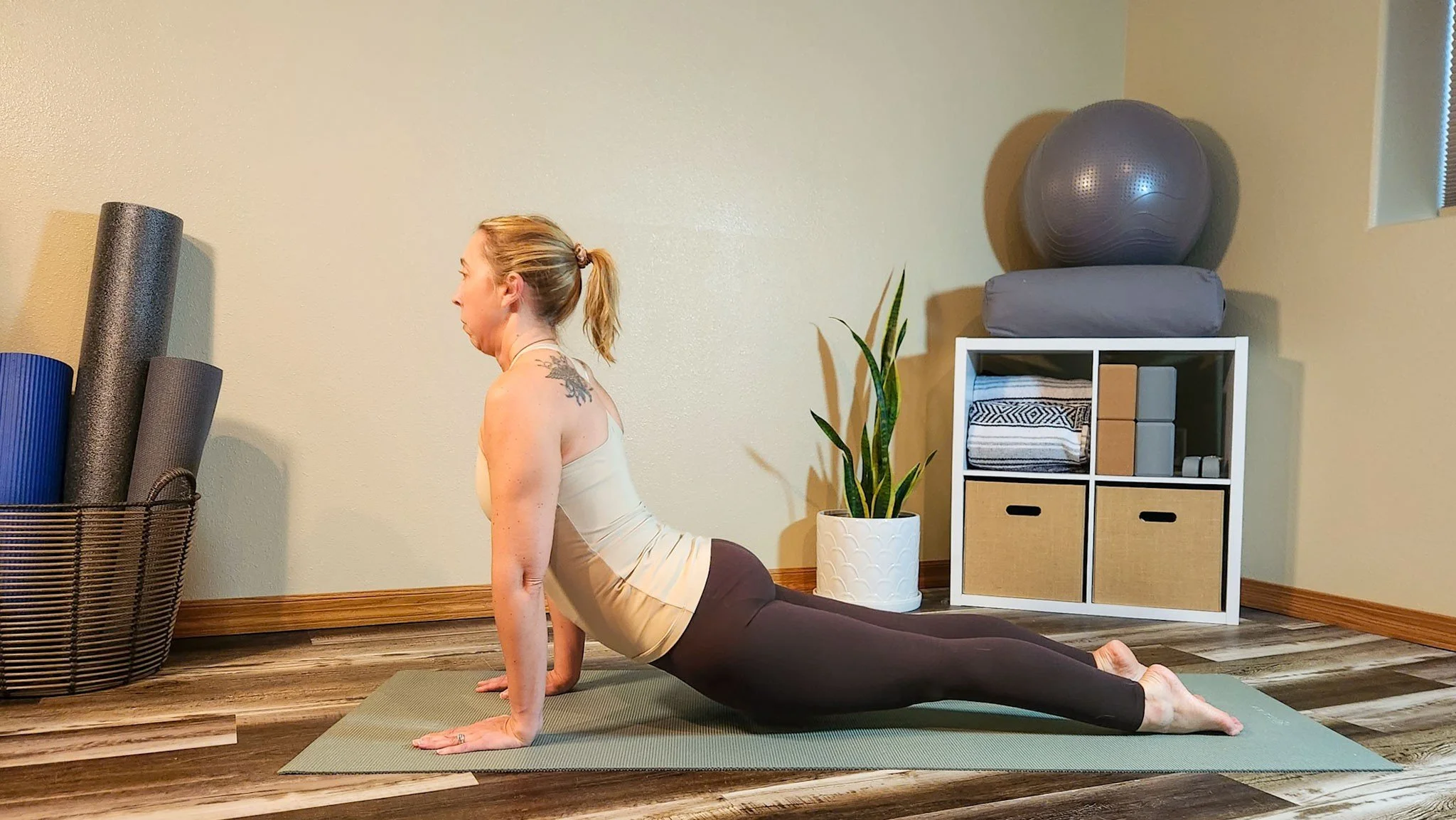
It’s one of the most frequently searched—and intensely debated—questions in modern Christian circles: Can Christians practice yoga?
Walk into almost any fitness studio, gym, or community center, and you’ll find a yoga class underway. For many, it’s an effective way to relieve back pain, build core stability, and manage daily stress. Yet, for believers, unrolling a yoga mat can bring a layer of hesitation. Because traditional yoga originated within Eastern spiritual traditions like Hinduism and Buddhism, many Christians wonder if stepping onto the mat compromises their faith in Jesus.
At The Selah Movement, we believe movement, breath, and stillness are gifts from God. The word Selah appears throughout the Psalms—a sacred invitation to pause, reflect, and breathe. Here is how Christians can approach movement with biblical discernment, historical perspective, freedom, and a heart focused entirely on Christ.
1. What Does the Word "Yoga" Actually Mean?
To answer whether Christians can do yoga, we first have to look at how we define the word itself.
The word yoga comes from the Sanskrit root yuj, which means "to yoke," "to join," or "to unite."
Historically, in Eastern traditions, yoga meant yoking oneself to universal consciousness or Eastern deities. But as believers, how do we define our practice?
For us at The Selah Movement, we see yoga as uniting our mind, body, and breath with the Lord Jesus Christ.
In Matthew 11:28–30, Jesus gives us a beautiful invitation:
“Come to Me, all you who labor and are heavy laden, and I will give you rest. Take My yoke upon you and learn from Me, for I am gentle and lowly in heart, and you will find rest for your souls. For my yoke is easy and my burden is light.”
When you practice yoga through a Christ-centered lens, you aren't yoking yourself to Eastern philosophy or spiritual energies. You are taking on the yoke of Jesus—aligning your physical body, your breath, and your heart in worship to the Creator who made you.
2. Human Physiology: Everyday Movements & Redemptive Poses

Everyday Human Movement
Natural postures—like a child lying on the floor to read—are simple human biomechanics designed by God, not ancient religious rituals.
One of the most practical truths to understand is that God designed human anatomy.
The human body possesses a finite set of joints, muscles, and movement patterns. You can flex, extend, rotate, hinge, bend, and stretch. There are only so many biomechanical ways the human frame can physically move!
Consider everyday life:
If you drop your car keys under the kitchen table and crouch down on all fours to reach for them, you are physically in a "tabletop" or "child's pose."
If a toddler reaches up high into a kitchen cabinet for a snack, standing on tiptoes with arms outstretched, they are in a "mountain pose."
If a child lies flat on their stomach on the floor to look at a picture book, propping themselves up on their elbows, they are in a "cobra" or "sphinx pose."
If you happen to make these movements in daily life, does that mean you are worshipping another god? Of course not! Nobody assumes a child reaching for cereal is engaging in ancient religious rituals.
3. Does a Pose Symbolize Worship to Another God? (And the Christmas Tree Parallel)
A common fear among Christians is: "If I do a specific yoga posture, am I accidentally worshipping a Hindu god?"
To answer that, let’s ask a straightforward question: Are you?
Meaning—are you performing that pose with the conscious intention of worshipping another deity?
If the answer is no, then simply holding a physical posture does not equate to worship of other gods. Physical movement without heart engagement is just physical movement.
The Parallel: Christmas Trees, Easter, and Redemptive Practice
To put this into perspective, think about how Christians regularly navigate other traditions with historical roots outside of the church:
Christmas & Winter Solstice: Celebrating the birth of Jesus on December 25th coexists with historical winter solstice festivals, evergreen trees, and Yule logs—traditions with ancient pagan origins.
Christmas Trees: Decorating an evergreen tree historically had ties to ancient winter rituals. Yet today, nobody sits around their Christmas tree on Christmas morning worshipping ancient pagan gods or Norse deities! Instead, Christians decorate trees to celebrate the light of Christ entering the world.
Easter Traditions: The name "Easter" and symbols like rabbits and eggs carry historical ties to spring fertility festivals, yet believers use the day to celebrate the glorious resurrection of Jesus Christ.
Christians frequently redeem cultural practices, physical symbols, and dates on the calendar by removing pagan intent and redirecting their focus back to Jesus. Nobody accuses a family opening presents under a pine tree of pagan worship because their intent is honoring Christ. In the exact same way, holding a physical stretch on a yoga mat while keeping your mind fixed on Jesus is an act of health, stewardship, and praise—not worship of another god.
Scripture affirms that worship comes from the intent and posture of the heart:
Intent matters to God: “Man looks at the outward appearance, but the Lord looks at the heart.” (1 Samuel 16:7)
Idols have no power over neutral things: In 1 Corinthians 8, the Apostle Paul addressed whether Christians could eat meat previously dedicated to idols. He explained that because idols are nothing, eating with a clean conscience and a heart thankful to God was completely fine—unless done with the intent to participate in idol worship.
4. Modern Postural Yoga vs. Ancient Yoga
Gymnastics & Physical Fitness
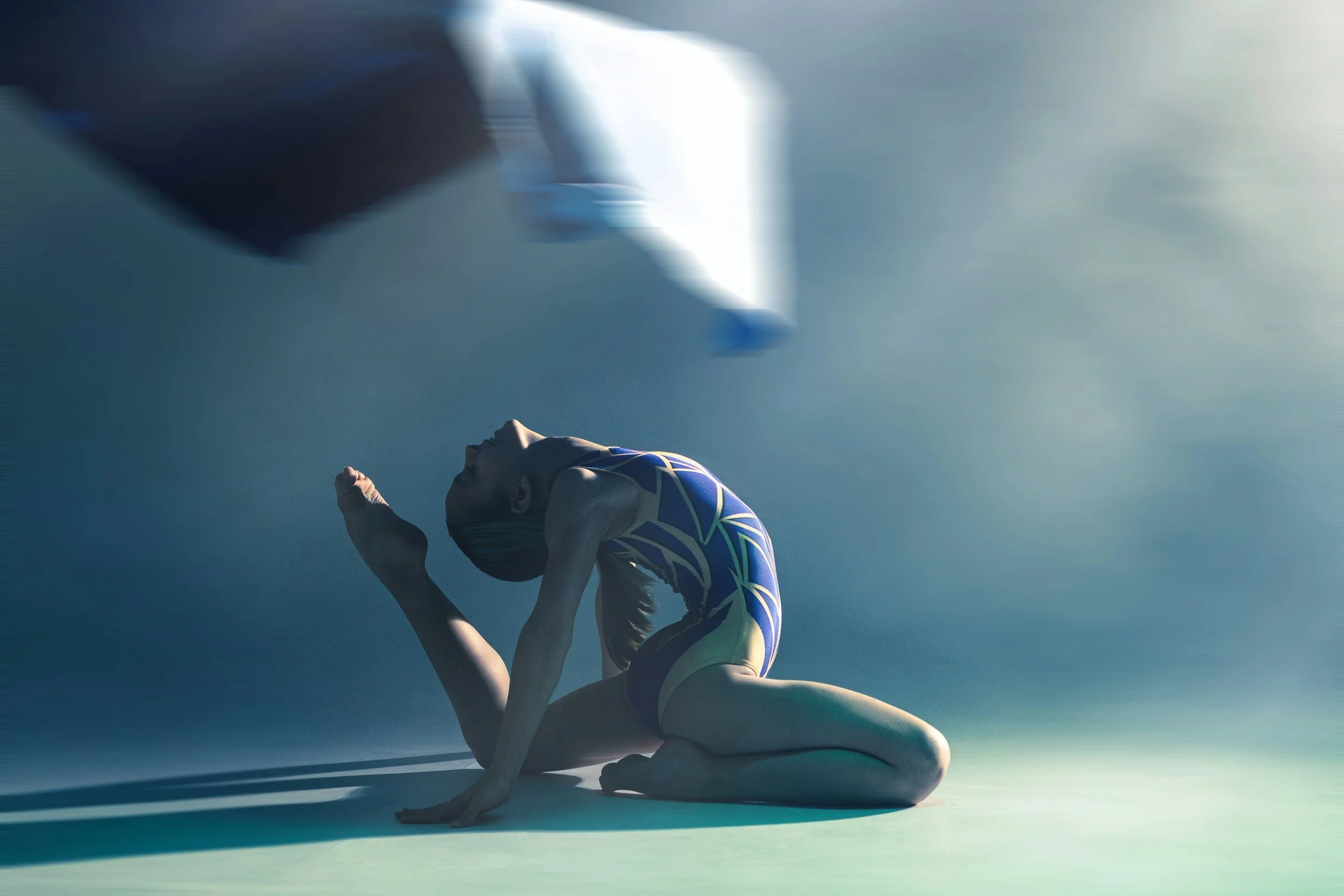
Many modern studio poses evolved from 20th-century Western gymnastics and athletic training rather than ancient spiritual rituals.
Many people assume that the yoga studio classes we see today are identical to what was practiced thousands of years ago in ancient India. However, historical and athletic research paints a very different picture.
Ancient Yoga: Was primarily an ascetic, meditative, and philosophical tradition. Physical postures (asanas) played a very minor role—often consisting of just a few comfortable seated positions meant for extended meditation.
Modern Postural Yoga: The dynamic flow of postures we recognize today—incorporating transitions, standing balances, backbends, and inversions—was developed largely in the late 19th and early 20th centuries.
In fact, modern yoga pioneer T. Krishnamacharya and his contemporaries drew heavy influence from Western gymnastics, British military calisthenics, physical culture movements, and wrestling exercises.
Many of the athletic poses practiced in modern studios were created fairly recently by gymnastics practitioners for physical fitness and body conditioning—not ancient spiritual rituals. Recognizing this historical context strips away much of the mystic myth surrounding modern studio fitness flows.
5. Breath & Breath Prayer: The Spirit of God Within Us

Holy Spirit & Breath
Pairing natural breathwork with Scripture meditation grounds our minds in God's peace and truth.
In Eastern traditions, breathwork (pranayama) is often described as manipulating "universal life energy." But as Christians, we know where breath actually comes from.
In Genesis 2:7, God formed man from the dust of the ground and breathed into his nostrils the breath of life, and man became a living being. The Hebrew word for breath, Ruach, is the exact same word used for the Holy Spirit.
Every breath you take is a direct gift from God. Breathwork in a Christ-centered practice isn't about channeling cosmic energy—it’s about slowing down to acknowledge the God who gives us life with every inhale and exhale.
Practicing Breath Prayer
A beautiful way to integrate faith with breath in movement is through Breath Prayers—an ancient Christian practice dating back to the Desert Fathers:
Inhale: "The Lord is my shepherd..."
Exhale: "I shall not want." (Psalm 23:1)
Inhale: "Be still..."
Exhale: "And know that I am God." (Psalm 46:10)
By pairing movement with breath prayer, your respiratory rhythm becomes a continual prayer of thanksgiving and surrender.
6. Overcoming the Fear of “Meditation”: Biblical vs. Eastern Meditation
Many Christians feel nervous when they hear the word meditation, assuming it always involves Eastern practices aimed at "emptying the mind" or connecting with self-divinity.
However, Christianity has a rich, thousands-of-years-old tradition of meditation! The Bible mentions meditation over 20 times in the Old Testament alone:
“Let the words of my mouth and the meditation of my heart
Be acceptable in Your sight,
O Lord, my strength and my Redeemer.”
The fundamental difference lies in direction and purpose:
Eastern Meditation: Aims to empty the mind of all thought and detachment.
Biblical Meditation: Aims to fill the mind with God’s Word, His character, His promises, and His truth.
When we practice meditation at The Selah Movement, we aren't emptying our minds into a vacuum. We are pausing to fill our thoughts with Scripture, reflecting deeply on God’s goodness while giving our nervous system a chance to rest in His peace.
7. Redefining the Mat: What Christ-Centered Yoga Looks Like
Christ-centered yoga isn't about blending religions—it’s about using low-impact movement, breathwork, and biblical meditation to worship the King of Kings.
Yoking & Connection
Traditional Yoga: Universal consciousness or self
Christ-centered Yoga: Jesus Christ and His Word (Matt 11:29)
State of Mind
Traditional Yoga: Emptying the mind
Christ-centered Yoga: Filling the mind with Scripture and truth (Joshua 1:8)
Core Focus
Traditional Yoga: Self-divinity
Christ-centered Yoga: God’s majesty and grace (Psalm 103:1)
Prayer & Breath
Traditional Yoga: Chanting traditional mantras
Christ-centered Yoga: Breath prayer & Scripture meditation
Surrender & Alignment
Traditional Yoga: Seeking inner self-alignment
Christ-centered Yoga: Surrendering heart and body to Jesus (Romans 12:1)
8. Questions for Personal Discernment
If you are navigating whether to incorporate yoga into your health or fitness routine, ask yourself these guiding questions:
What is my heart's intent? Am I seeking physical stewardship, stress relief, and prayerful stillness with Jesus, or am I opening myself to non-Christian spiritual teachings?
What is the environment? Does the instructor use Eastern spiritual chants and philosophies, or is the focus anchored on faith and physical wellness?
Is my mind guarded? Am I active in meditating on Scripture during breathwork, or am I passively accepting external philosophy?
Does my conscience feel clear? As Paul outlines in Romans 14, if something causes you spiritual anxiety, honor your conviction before God.
Pause, Breathe, and Praise
Can Christians do yoga? Yes—when practiced with intentionality, historical perspective, and a heart yoked entirely to Jesus.
Your breath was given to you by the Creator. Your body is a temple of the Holy Spirit, and there are only so many ways God created it to move! When you step onto your mat at The Selah Movement, you don't have to leave your faith at the door. You can use every stretch, breath, and quiet moment to take a Selah—pausing to give glory to the One who made you.
